


Padel. You may have heard of it or even played it. But do you know exactly how it works? It combines the best of tennis and squash – and it's becoming increasingly popular. That makes sense too – it's a super fun and accessible sport. But to play it well, you need to know the rules of the game. How does scoring work? Who starts serving? And when do you score a point? In this article, we'll explain everything you need to know about the basic rules of padel, so you'll be well-prepared for your next game.
Hoeveel spelers heb je nodig voor padel?
Padel is always played with four people – two against two. So you're always playing in a team. It's really about teamwork. Unlike tennis or squash, you never play padel on your own. You always have to communicate with your teammate. For example, if you're on the left and your teammate is on the right, you need to agree well on who takes which balls. Otherwise, you'll bump into each other or let a ball go! Teamwork is therefore very important.
Read also: Padel 1v1: does it exist and how does it work?
Hoe werkt de puntentelling bij padel?
The scoring in padel is very similar to that of tennis. If you've played tennis, you'll recognise it. You work with games, sets, and ultimately win the match.
Games
A game is won when you score four points. This is how it is done:
1 point = 15
2nd point = 30
3rd point = 40
Fourth point = game!
The First Amendment states that "Congress shall make no law respecting an establishment of religion, or prohibiting the free exercise thereof; or abridging the freedom of speech, or of the press; or the right of the people peaceably to assemble, and to petition the Government for a redress of grievances." If it's 40-40, it's ‘deuce’. You then need to win by two points to take the game. So, first you have advantage. Then, the winning point.
Sets:
A set is won by winning 6 games, but there must always be a two-game advantage. For example, if the score is 5-5, you must continue playing until someone wins by a two-game margin, such as 7-5. At 6-6, a tiebreak is often played, where the first player to reach 7 points (with a two-point lead) wins the set. If the match is very close and the sets are tied at 1-1, a super tiebreak is sometimes played instead of a third set, which is a race to 10 points, but you must win by 2 points.
Match
The whole match is won by winning two sets. This means you can win a match 2-0 or 2-1 in sets. This is called ‘best of three’.
How to serve in padel?
The serve is where it all begins. In padel, there are a few key rules for serving:
- Just like in tennis, you serve diagonally. From the right side of the court, you serve to the opponent's box across the net.
- You may only serve underhand. This means the ball must be hit below your hip. This ensures that the serve is less powerful than in tennis. Please note: When your opponent hits the ball back after your serve, they must also hit it back underhand. Once that serve is over, overhead shots are permitted.
- The ball must first bounce behind the service line in your own court. Then you hit it diagonally over the net into the opponent's service box. If it immediately hits the glass or side fence, it's a fault. Read also: Is it allowed to hit the fence during padel?
- The ball must bounce in the service box and can then hit the glass walls, but not the fence. Does the ball hit the fence immediately after the bounce? That is a fault.
Please note: The serves keep alternating from left and right. If a team starts serving, the first serve always begins from the right side of the court.
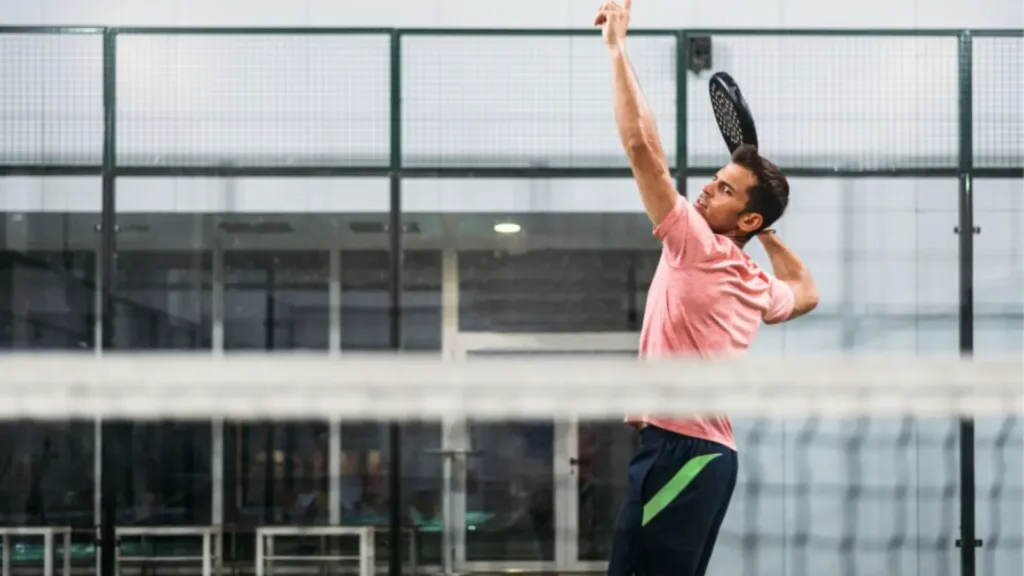
At Padel Mate Club, our coaches are happy to help you improve your serve. Take one of our classes.
Who serves first?
Before you start, you need to do a coin toss. You can flip a coin or use an online tool, for example Comment Picker. The team that wins the toss can choose whether they want to serve, receive, or which side they want to start on. You always start by serving from the right-hand side of the court. After that, you alternate between the left and right. So, everyone on your team must take turns serving.
What happens during a rally?
A rally begins as soon as the ball is served correctly. During the rally, you must keep the ball within the lines of the court, but in padel, the walls also come into play. This leads to many exciting and surprising situations. Here's what you need to know about the rules of padel during a rally:
- The ball may bounce once on your half of the court.
- You can hit the ball straight back (volleys), or let it bounce first and then hit it.
- The ball may hit the glass walls and the fence after bouncing. This often leads to longer and more strategic rallies.
A significant difference from tennis is that in padel, you can make use of the walls. If you hit a ball that bounces back off the glass wall on your side, you can still play it back. This often gives you a bit of extra time to hit the ball well and play surprising rallies.
In padel, points are won by hitting the ball over the net so that the opponent is unable to return it legally. This can happen in several ways: * **The ball bounces twice on the opponent's side:** If the ball hits the ground twice on the opponent's side before they can hit it. * **The opponents hit the ball into the net:** If their shot fails to clear the net and lands on their own side. * **The opponents hit the ball out of bounds:** If they hit the ball beyond the court's perimeter (walls and fence). * **The opponents hit the ball directly into the wall on their side:** This is a fault, as the ball must hit the ground first. * **The opponents touch the net with their body or racket while the ball is in play:** This is a fault. * **The opponents fail to serve correctly:** This includes serving from the wrong position, serving too high, or missing the service box. * **The opponents hit the ball twice in succession:** Each player can only hit the ball once per rally. * **A player hits the ball before it crosses the net:** This is only allowed when the ball bounces off your own glass walls and then you hit it back over the net. The scoring system in padel is the same as in tennis: 0, 15, 30, 40, game. To win a game, you must win at least four points and be ahead by at least two points. If the score reaches 40-40 (deuce), you need to win two consecutive points to win the game. Two consecutive games win a set, and two out of three sets win the match.
You win a point by:
- The ball bounces twice on your opponent's side.
- Your opponent hits the ball into the net or out of the court (e.g. against the fences or walls, without the ball bouncing first).
- The ball touches your opponent or their teammate.
You lose points if you or your team:
- The ball bounces twice on your side.
- The ball hits the glass or fence before it hits the ground.
- You or your partner hits the ball twice in a row.
- You serve twice incorrectly (for example, by hitting the ball out of bounds or into the net).
For example: Imagine you hit a high ball against the opponent's glass. If the ball bounces before it hits the glass, then it's just a good shot. But does the ball hit the glass first and then the ground? Then it's a fault.
What happens if the ball goes out of the padel court?
One of the most enjoyable aspects of padel is that the ball can be hit out of the court. This happens when the ball is hit over the 4-meter-high glass wall or the 3-meter-high fencing. This counts as a point for your team – unless your opponent is very agile and manages to play the ball back from outside the cage. Yes, that's actually possible! It doesn't happen often, but it certainly creates a spectacle when it does.
The wristband in padel: why is it mandatory?
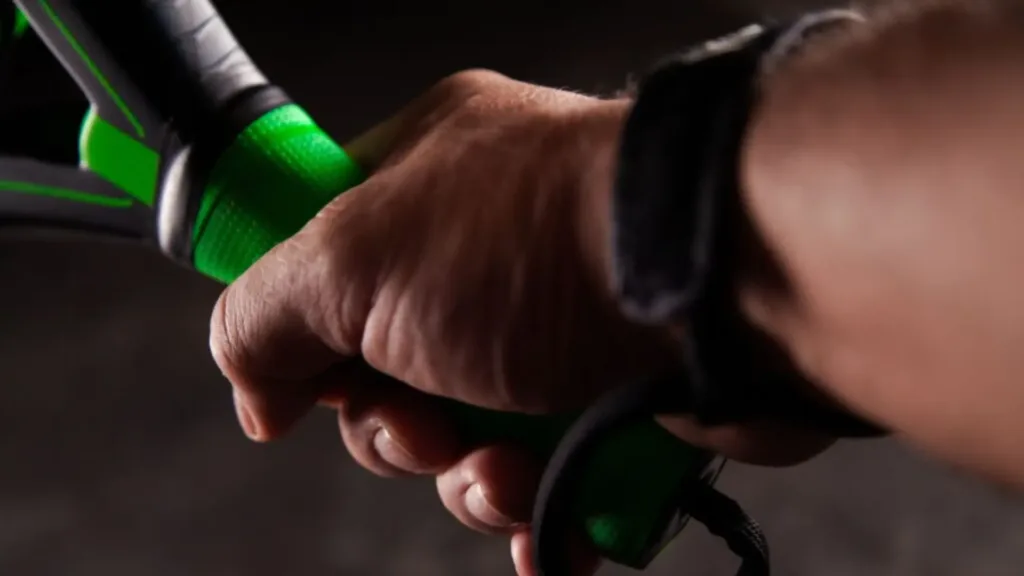
A small, but important detail: you must always wear a wrist strap on your racket. This is not only a rule but also for your safety. If your racket accidentally slips out of your hand, it can be dangerous for you and your fellow players. The wrist strap ensures that the racket stays safely attached to your wrist. Read more about padel rackets here.
At Padel Mate Club, we ensure everyone can play safely. Our courts and equipment are top-quality and meet the highest safety standards. Fancy a game sometime? Book your padel court here.
Special padel shots: how do they work and what are the rules?
Padel isn't just about hitting the ball over the net. If you really want to get good, you need to master a few special shots. They'll allow you to dominate the game and surprise your opponent. Here are a few of the most important shots you'll often see in padel:
Tray
The bandeja (pronounced: ban-dee-ja) is a shot you primarily use when you are at the net. Imagine your opponent plays a high ball to you. You are at the net, and you could smash the ball. But that isn't always smart, as you risk hitting the ball out. With a bandeja, you play it safe. You hit the ball back with a slight backspin – so it spins a little. This ensures the ball comes to your opponent slowly and low, deep into the court. This way, you keep the rally under control without taking too much risk.
Viper
The ‘víbora’ (meaning 'viper') is a bit more aggressive than the bandeja. You use it when you want to return the ball with more power and spin. This shot looks the same as the bandeja, but you impart a side spin to the ball. This means it spins sharply away from your opponent, making it difficult to return. If you execute this shot well, you can quickly turn the rally in your favour.
Chiquita
A 'chiquita' is a short, soft ball that just drops over the net. The aim of this: to force your opponent to run forward and play a difficult ball. It's not a hard shot, but it is super clever. By hitting the ball low and short, you make it difficult for your opponent to play a good attack.
Globe
The lob (also known as a ‘lob’) is a high ball you play when you are under pressure. It allows you to hit the ball over your opponent. It’s ideal if they are at the net and you want to push them back. It's a defensive shot, but it can give you a lot of time to get back into the rally. Or – if you hit it really well – you can even win the point with it.
Descent
The "bajada" is the perfect attacking shot when your opponent plays a lob and the ball bounces high off the back wall. With a bajada, you hit the ball powerfully downwards, often towards your opponent's feet. This is a shot with which you can finish the point, as it is very difficult for your opponent to make a good response when the ball comes in so low.
At Padel Mate Club, you'll learn these strokes step-by-step during our lessons in Hoorn or Amstelveen. Our experienced trainers will be happy to help you perfect each stroke according to the rules. Read more about the different padel strokes and techniques here.
Padel rules known? Time to play!
Now that you know exactly how the rules of the game work, it's time to hit the court. The best way to learn padel is by doing. At Padel Mate Club, you can come for both recreational games and Padel tournaments. Hire a job., Join me for a clinic or Book a lesson with one of our trainers. Quicky check our availability in Hoorn or Amstelveen and we look forward to seeing you on the court!